
The SEEP 2026 Conference Programme is now available Download Here
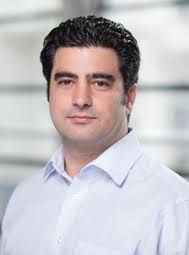
Christos Markides is Professor of Clean Energy Technologies, Head of the Clean Energy Processes Laboratory, and leads the Experimental Multiphase Flow Laboratory, which is the largest experimental space of its kind at Imperial College London. He is also, amongst other, Editor-in-Chief of journal Applied Thermal Engineering and founding Editor-in-Chief of new journal AI Thermal Fluids.
Professor Markides specialises in applied thermodynamics, fluid flow and heat/mass transfer processes in high-performance devices, technologies and systems for thermal-energy recovery, utilisation, conversion or storage, with a particular focus on solar- and waste-heat conversion.
He has authored >440 articles on topics related to this talk, including a number of review articles, and books; recent highlights include: “A review of solar hybrid photovoltaic-thermal (PV-T) collectors and systems”, “High-efficiency bio-inspired hybrid multi-generation photovoltaic leaf”, “Renewable and waste-heat utilisation technologies” (Cambridge), “Power generation technologies for low-temperature and distributed heat” (Elsevier). His publications have attracted over 21,000 citations (h-index = 78).
He has won multiple awards, including IChemE’s Global ‘Clean Energy Medal’ in 2025, IChemE’s ‘Global Award for Best Research Project’ in 2018, IMechE’s ‘Donald J. Groen’ outstanding paper prize in 2016, and received Imperial College’s President Awards for Research Excellence in 2017 and Teaching Excellence in 2016. He has an interest in technology transfer, innovation and commercialisation, most recently as a founding Director of Solar Flow.
Recent developments in advanced solar PV-X multigeneration technologies
Organisation: Imperial College London, U.K
Photovoltaic (PV) panels are typically less than 20% efficient in delivering electricity from the Sun’s energy with the remainder lost to the environment as waste heat. At the same time, it is well known that PV panels experience a deterioration in performance (efficiency) when they are operated at higher temperatures. This loss has motivated the development of ‘hybrid’ PV-thermal (PV-T) solar collector technology, which combines PV cells with a contacting fluid flow. The fluid is used to recover some of the waste heat from the cells, thus delivering a potentially useful thermal output from the collector, while simultaneously cooling the cells and increasing their electrical efficiency.
In this talk, we will present conventional and advanced hybrid PV-T collector designs along with their underpinning operational principles, discuss the challenges and opportunities of further developing these technologies, and of integrating them within wider solar-energy systems capable of the affordable provision of cooling, heating and power. We will also propose a new concept that we refer to as ‘PV-X’ solar collectors, which harnesses additional performance benefits when these secondary processes are integrated synergistically with the PV cells and performed directly within the collector.