
Oil pollution at the air–water interface is a significant environmental problem affecting oceans, seas, rivers, lakes, and coastal ecosystems. When oil is accidentally released into water through oil spills, tanker accidents, offshore drilling, industrial discharge, or ship operations, it can spread across the water surface and form thin oil films. These films may range from a few micrometers to several millimeters in thickness. Even very thin oil layers can cause serious environmental damage because they interfere with natural interactions between the atmosphere and water. Removing thin oil films is particularly challenging because they spread rapidly, are easily transported by wind and currents, and can be difficult to detect and collect using conventional oil-spill cleanup technologies.
According to historical facts, thousands of tons of oil and oil products have been wasted during numerous accidents, resulting in the pollution of large areas of water bodies. The largest pollution in the last 60 years occurred in 1964 (about 0.6 billion barrels) and 2005 (about 0.4 billion barrels). Oil and oil products flowing from tankers spread over water bodies and have an extraordinary impact on nature. It is necessary to clean crude oil and oil products from water basins in a short time. In the first stage of purification, the oil is collected mechanically and removed by pumps. The cleaning of a thin layer of oil on water bodies takes place in the second stage. Thin layers of oil can upset the balance in nature.
The object of the research is synthesis and generalization of the properties of surface active components based on various chains of alkylamines. The subject of the study covers how surface activity and petrocollecting and dispersing properties change as a result of changes in the composition and structure of substances obtained by derivatives of amines.
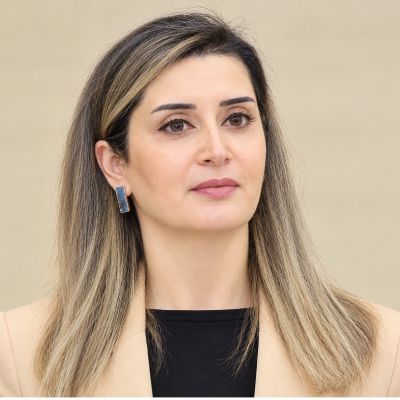
Dr. Sevda Zargarova is the Vice-Rector for Education and Scientific Affairs at Baku Higher Oil School (BHOS), SOCAR, Azerbaijan. She is a chemical engineer and higher education professional with extensive experience in academia, university administration, scientific development and international academic cooperation. Dr. Zargarova obtained her Bachelor’s degree in Chemical Engineering from Middle East Technical University (METU), Türkiye, graduating with distinction in 2010. She subsequently completed her Master’s degree in Chemical Engineering at Hacettepe University, Türkiye, in 2013. She also pursued doctoral research in Oil Chemistry at the Institute of Petrochemical Processes named after Y. H. Mammadaliyev.
Dr. Zargarova began her academic career at Baku Higher Oil School in October 2013 as a lecturer in the Department of Chemical Engineering. Throughout her career at BHOS, she has contributed to the development of engineering education, academic programmes, scientific research and the advancement of higher education. Her professional responsibilities have progressively expanded from teaching and academic activities to institutional leadership and strategic management.
In her current role as Vice-Rector for Academic and Scientific Affairs, Dr. Zargarova is involved in overseeing academic and scientific activities, supporting the continuous improvement of educational quality, promoting research and innovation, and strengthening the integration of education, science and industry. Her professional interests include chemical engineering, engineering education, scientific research development, academic quality assurance, internationalisation of higher education and university–industry collaboration.
Environmental Challenges in the Removal of Thin Oil Films at the Air–Water Interface