
Symposium on: Streamlining the optimisation of Sustainable Thermal Energy systems and Prototype technologies in process industries
The European process industries play a vital role in achieving climate neutrality by 2050, currently responsible for 20% of greenhouse gas emissions and 25% of final energy consumption in Europe. A significant portion (66%) of industrial energy use is dedicated to process heating. While technologies like heating electrification can support decarbonisation, challenges such as high upfront costs, low digitalisation, and the need for further R&D on heat pumps remain. Sustainable heating technologies aim to improve energy management at the plant level through peak reduction and load shifting.
StreamSTEP: Streamlining the adoption of advanced solutions, comprising both technologies and practices, for sustainable heating energy in energy-intensive industries
The StreamStep project aims to improve heating energy management in industrial processes. The project will deploy five innovative heat exchanger prototypes for waste heat across temperatures from 135°C to over 1400°C. High-temperature heat pumps will enhance heat recovery, achieving outlet temperatures of 150°C and 215°C, with improved performance through ejector technology. Advanced manufacturing techniques and novel material alloys will enable these innovations. The system will be demonstrated across five sectors, copper, ceramics, silicon, plastics and oil & gas, with significant impacts on waste heat recovery, productivity, and energy flexibility.
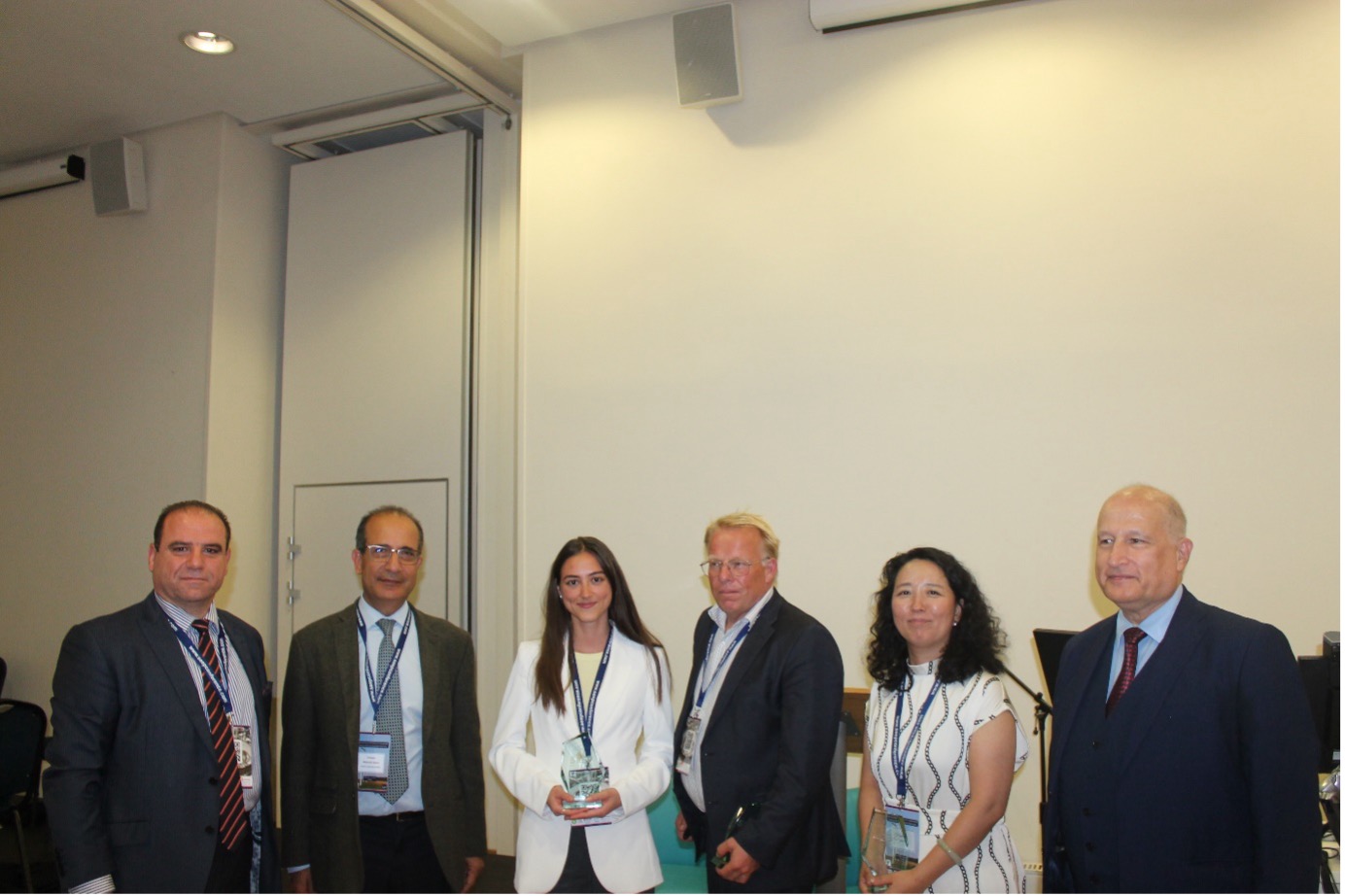
Researcher, Morten I. Onsøien Symposium Chairman Sarina Bao is the Coordinator, Senior Researcher Eivind Johannes Øvrelid is the Scientific and Technical Director, and Prof. Hussam Jouhara is the Demonstration Implementor of the StreamSTEP project.

StreamSTEP Solutions
Advanced Heat Exchanger (AHX)
5 advanced HX prototypes will be delivered, tailored to challenging applications in process industries while employing advanced manufacturing technologies to address challenging streams (e.g., corrosion, erosion, non-steady waste heat streams, radiative sources), cost-efficiency, heat recovery rate between 50-90%, from gaseous and solid media, with dynamic operation.
High Temperature Heat Pump (HTHP)
High temperature heat pumps (HTHPs) are introduced to address challenges for sustainable heating energy use, with outlet temperatures in the 150-215 °C range and revise the role of ejector components to further boost HTHP coefficient of performance – COP.
Process Industry Digitalisation
Process data collection and management platform will be consolidated, providing the digital infrastructure needed for the planning and management of process lifecycle, supported by the integration of sensor configurations, enabling real-time and predictive monitoring.
Improved heat performance
Combine various additive manufacturing techniques with digital advancements to improve efficiency, sustainability, and design flexibility while reducing material use, cycle time, and costs enabling concept improving heat performance.
Smart energy Planning and Management
Process hybrid Digital Twin (HDT) framework will be consolidated to enhance the design and management of heat recovery and reuse processes, utilising virtual models to simulate and optimize real-world systems.

Expected Impact
StreamSTEP will find ways to adopt advanced solutions, comprising both technologies and practices, for sustainable heating energy in Energy Intensive Industries leading to the following impacts:
- Consolidate a process data collection and management platform, providing the digital infrastructure needed for the planning and management of process lifecycle.
- Consolidate a process hybrid Digital Twin (HDT) framework to enhance the design and management of heat recovery and reuse processes.
- Reduce 25% environmental footprint of heat exchanger and heat pipe components manufacturing.
- Deliver 5 advanced HX prototypes – DC1 Copper, DC2 Ceramic, DC3 Silicon, DC4 Plastic, DC5 Oil and gas.
- Introduce HTHPs with outlet temperature in the 150-215°C range and revise the role of ejector components to further boost HTHP coefficient of performance – COP.
- Improvement in flexibility metrics by at least 25% over the baseline (=as is) for REsilient, Sustainable and Intelligent Operation toolkit.
- Comprise 5 demonstrators, complemented by an impact booster, amplifying the outcomes in terms of marketability, social value creation and accelerate StreamSTEP adoption.
Copper

Ceramics

Silicon

Plastics

Oil and gas

Symposium on: Streamlining the optimisation of Sustainable Thermal Energy systems and Prototype technologies in process industries, StreamSTEP
Chaired by Dr. Sarina Bao, the symposium on optimisation of sustainable thermal energy in energy intensive industries will bring together experts, researchers, and industry professionals who are interested in sustainable industrial processes that optimize the sustainable thermal energy and provide an opportunity for attendees to learn about the latest developments in the sustainable thermal energy and to exchange ideas with fellow experts and peers in the field.
The symposium will feature presentations from the StreamSTEP project partners, as well as invited speakers from academia and industry. The presentations will cover topics such as the design and implementation of the StreamSTEP solutions, Safety and Standardization, flow sheet modelling, heat pump design, testing & prototyping, sensorisation, thermal imaging, digital twins, process flexibility, process optimisation, sustainable working fluids, global optimisation, industrial heat pump Original Equipment Manufacturers (OEM), the scalability, using concrete examples drawn from the project’s demo cases in the ceramic, chemical, and copper.
Don’t miss this opportunity to learn about the latest StreamSTEP developments in optimisation of Sustainable Thermal Energy and to exchange ideas with experts and peers in the field.
About the Symposium Chairman Dr. Morten I. Onsøien
Morten I. Onsøien is Research Manager at SINTEF in Trondheim Norway. He received his B.Sc. degree in metallurgical engineering from Trondheim College of Engineering, Norway, in 1983. After working several years as a research engineer with the research foundation SINTEF, he went back to school, and in 1994 he received his M. Sc. degree in Materials and Metallurgical Engineering from Colorado School of Mines, USA. In 1997 he received his Ph. D. degree in physical metallurgy from the Norwegian University of Science and Tecnology.
His professional interests are in the areas of casting, welding and heat treatment of steel and iron. Nevertheless, as manager of a group of scientists working with casting, forming and recycling of metals he is deeply involved in a broad range of research projects. Dr. Onsøien has authored more than sixtyfive technical papers and publications and holds two patents. He is member of the American Welding Society, American Foundry Society, Norwegian Welding Association, Norwegian Foundry Association and Norwegian Metallurgical Society.

About the Project Director Dr Sarina Bao
Sarina Bao holds a PhD Degree in Material Science and Engineering from the Norwegian University of Science and Technology from 2011. She is currently Researcher of Casting, Forming, and Recycling at the Department of Metal Production and Processing, SINTEF, Norway.
Her main research interests focus on energy-intensive process industries, with expertise in aluminium, silicon, manganese. Her research has primarily centered on raw materials, production, refining, and recycling processes, and currently converges to sustainable thermal energy. Dr. Sarina Bao is the Coordinator of the StreamSTEP project.

About the StreamSTEP Demonstration Implementor
Prof. Jouhara is a Full Professor at Brunel University of London and a Fellow the Royal Academy of Engineering. He obtained his PhD in Mechanical Engineering from the University of Manchester, UK in 2004 and has a career in both the Industry and Academia since then.
He is a Chair of Thermofluids at Brunel and the Principal Investigator of many national and international projects in the areas of multiphase heat transfer, energy efficiency, renewable energy systems and innovative thermal management systems for electronics, nuclear and biomedical applications. Throughout his academic and industrial career, Prof Jouhara has received over £16M in direct grants fundings from Various industries and research councils. His innovative design methods have led to applications of the heat pipe technology in over 32 countries, and many granted international patents.
The development of heat pipe heat exchangers, produced by Prof. Jouhara, has been applied in many industries, from high temperature processes such as recovering waste heat from ceramics, steel industry, food processing, solar PV thermal management and thermal energy storage using PCMs. His patents have been adopted and implemented by various multi-national companies. Details on Prof. Jouhara’s publications can be found here: Selected publications | Brunel University London